



 Posts
Posts





Live Recording May. 6. 2009, NPR Brodcast from Jordan Hall, Boston.
“Having always felt intimate with Bartók's as well as gypsy music of the roma, I've thoroughly enjoyed playing this recording, loud. It helps to have recently read "Bury Me Standing"- comes from the saying, "Bury me standing, I've been on my knees all my life".”
"The acclaimed Takács String Quartet joins the Hungarian folk ensemble Muzsikás (with singer Márta Sebestyén, whose inimitable voice you may recall haunting the soundtrack to "The English Patient") to celebrate Hungarian composer Béla Bartók...
When the members of the Takács Quartet and Muzsikás combine for a concert, they delight in making clear the connections between Bartók's own music and his folk-music obsessions. For example, they alternate movements from some of Bartók's best-known pieces (Romanian Folk Dances, String Quartet No. 4) with the real village dances he collected in the field — both the actual old scratchy records and their own live versions thereof..."
Tracklist / Concert program
Bartók: Violin Duos
Track 01.
- Torontal Dances (Muzsikás)
- "Ardeleana" (historic Bartók field recording)
- Duo No. 44
Track 02.
- "Shoe of My Horse" (Márta Sebestyén)
- Duo No. 28
- Duo No. 32
- "Jocul Barbatesc" (Márta Sebestyén)
Track 03.
Bartók: Sonatina (with traditional tunes)
- Bagpipes (Takács Qt.)
- Bear Dance (Takács Qt.)
- Bear Dance from Gyimes (Muzsikás)
Track 04.
Traditional: Ballad of the Murdered Shepherd
Track 05.
Bartók: Romanian Folk Dances (with source tunes)
- Bota es Invertita (Muzsikás)
- Stick Dance (Takács Qt.)
- Waistband Dance (Takács Qt.)
- "Pe Loc" (Muzsikás)
- Hornpipe Dance (Takács Qt.)
- Romanian Polka (Takács Qt.)
Artists:
Takács String Quartet (Takács Vonósnégyes)
Muzsikás with Márta Sebestyén (Muzsikás együttes és Sebestyén Márta)
Link
pass: bluesmen-worldmusic.blogspot.com

"Creating a journey of songs that have traveled up hills and down mountains, traversed open grasslands and floated down rivers, huddled in tiny villages, crept past lonely rooms and wafted out onto misty churchyards, Márta Sebestyén has truly triumphed with her latest I Can See the Gates of Heaven… Hungarian Religious and Secular Songs. Carving out elegantly wrought musical signposts with her shapely vocals, Ms. Sebestyén lays down a path to the rich, ripe folk traditions of Hungary’s past. I Can See the Gates of Heaven… is astonishingly good.
With appearances on more than 100 recordings like the movie soundtrack The English Patent, Deep Forest’s Boheme, Peter Gabriel’s Big Blue Ball and Kismet, Ms. Sebestyén’s stellar career also includes performances throughout Europe, China, Japan and the United States, as well as, numerous awards such as the St. Martin Prize, Fellini Award, a Grammy Award and a Golden Giraffe. Joining Ms. Sebestyén on I Can See the Gates of Heaven… are musicians Mátyás Bolya (dudák, shepherd’s flutes, fujara, tárogató, saxophone and overtone singing), a member of the Moldavian music scene and a researcher at the Folk Music Archive of the Hungarian Academy of Sciences’ Institute of Musicology and Balázs Szokolay Dongó (lute, and zithers), a former member of Békés Banda and a bagpipe teacher at the Óbunda Folk Music School. Together, they have turned their talents toward the revitalization of the Hungarian folk tradition.
Stringing pearls of melodies and folk songs into sparkling tracks, I Can See the Gates of Heaven… opens with the eerily ancient sounding “Vision,” incorporating the Moldavian ‘Csángó’ Hungarian tunes “Mountains and Valleys” and “Mary Lullabye.” Dipping into a font of overtone singing by Mr. Balázs and achingly lovely vocals by Ms. Sebestyén, “Heritage” pairs the Eastern sounds of a Cheremis song with the delightful lonely sound of a shepherd’s song. The quaintly Medieval-sounding “Flower Gatherers” shimmers with flute, tin whistle and koboz.
The vibrant jaunt that is “Sending off Sorrow” includes “If You Too, Laci…,” “Goat-Like Dance” and “A Rhythmic Yell” from the Moldavian ‘Csángó’ tradition. The solemn “Invocation” is crafted out of potently reverent “Oh, Saint Stephen” before blossoming into the Eastern flavored “Don’t Let Me Fall…” with a sultry serpentine saxophone and koboz. The bright ribbon of folk melodies on “Valiant Knights,” “Good King Matthias” with its winding troubadour melody and couple dance and finally “Evening Prayer” with the opening Middle Ages melody “Kyrie” and delicate flute and zither work steep I Can See the Gates of Heaven… in crystalline beauty.
Ms. Sebestyén’s silvery vocals and expressive delivery surely cast a spell over the listener, invoking rich folk images of Hungary that only sparkle more brightly with the additions of Mr. Balázs on flutes, fujara and saxophone, along with Mr.Dongó on koboz and zithers. I Can See the Gates of Heaven… is a delightful journey, colored by centuries of Hungarian tradition, preserved and presented by these true Hungarian masters."
1. Látomás / Vision
2. Örökség / Heritage
3. Virágszedők / Flower gatherers
4. Bú-küldöző / Sending off sorrow
5. Könyörgés / Invocation
6. Válogatott vitézek / Valiant knights
7. Jó Mátyás király / Good King Matthias
8. Estéli ima / Evening prayer
Márta Sebestyén - voice, flute, tamburine
Balázs Szokolay Dongó - bagpipe, flutes, saxophone
Mátyás Bólya - Moldavian lute, zither
Link
pass: bluesmen-worldmusic.blogspot.com

"Despite the best efforts of Romania's Ceaucescu dictatorship to make Transylvanian folk culture disappear, it survived at least in part due to the very deprivations (e.g., the lack of electricity and education) that were intended to destroy it. This well-known Hungarian quintet began rooting around in the one-time Hungarian territory a decade ago, and their first collection of Transylvanian tunes is a deep and diverse treasure trove of nearly forgotten centuries-old acoustic history. A droning hurdy-gurdy introduces a song about the "damned misery of love"; a pair of fiddles rouse dancers to high-stepping wedding and Christmas dances; a sad string quartet accompanies a song describing "The Time of Autumn" when conscripted soldiers left their villages. And, as with all Muzsikas's albums, Marta Sebestyén's wise and clear and cold voice re-creates another world in your living room."
01. Betyárnóta
02. Istenem, Istenem
03. Kalotaszegi legényes
04. Szapora
05. Bodomkuti hajnali
06. Ősz az idő
07. Kati - Kata
08. Boncidai cimbalmos
09. Régi somogyi énekek
10. Régi lakodalmas
11. Ha felmegyek Kolozsvárra
Sándor Csoóri: viola, bagpipe, violin
Péter Éri: guitar, kaval, viola
Dániel Hamar: double bass, gardon
Mihály Sipos: violin
with
Márta Sebestyén: voice
Link
Original uploader: gyöngy. Thanks!

Traditional folks songs arranged by Nikola Parov and Márta Sebestyén.
Music of the Balkans married with Irish and Greek, Indian lullabies combine to make this a unique and beautifully delicate recording. As always though it is Marta"s singing that tugs the heart-strings.
"4 Stars - Excellent - ...one more global experiment that works quite beautifully..."
"...KISMET spans the globe, lovingly and with a loving spirit....There is a cohesion within exploration here..."
"...the gifted Hungarian singer zigzags from Ireland to India, bring[ing] us closer to a 21st-century inevitability --one big worldwide music culture, into which regional sounds are absorbed..."
"...an effort to be highly praised..."
"...Nobody else has a voice like this: low but sharp as a knife, with a wide, easy vibrato, perfect diction and lazy, looping, Byzantine ornaments..."
1. Devoiko Mome
2. Sino Moi
3. Leaving Derry Quay / Eleni
4. Gold, Silver Or Love
5. Hindi Lullabye
6. The Shores Of Loch Brann / Hazafelé
7. If I Were A Rose /Ha én rózsa Volnék
8. Imam Sluzhba / The Conscript
Musicians:
Márta Sebestyén - voice
Nikola Parov - guitar, koboz, flute, tambourine, keyboards, bouzouki, kaval, gadulka, clarinet, tambura, gardon, whistles, bass, drum , sequencer programming
Zoltán Lantos - violin
Kornél Horváth - percussion
Péter Éri - mandola
András Berecz - voice
Link
pass: bluesmen-worldmusic.blogspot.com

"Everybody knows klezmer music, but what we can hear on this exceptional album is the ancestor of klezmer - the forgotten old Jewish music of the Carpathian Basin.
Muzsikás has recoded these songs after years of research, which produced interesting results - for example collecting music from gypsies, authentic players of klezmer, or finding instruments such as the guitar-like 'zongura' or drum with cymbal. The results of this research are all here on this wonderful album.
The beautiful trustworthy voice of Márta Sebestyén brings a special breath to this recording."
01. Khosid Wedding Dances
02. The Rooster Is Crowing
03. Dance From Máramaros
04. Lamenting Song
05. Ane Maamin
06. I Have Just Come From Gyula
07. Farewell To Shabbat
08. Jewish Dance From Szászrégen
09. Hat A Jid A Wejbele
10. Jewish Csárdás Series From Szék
11. Khosid Dance
12. The Greeting Of The Bride
13. Haneros Halelu
14. FareWell To The Guests
Musicians:
Sándor Csoori - violin, viola, guitar
Péter Éri - Guitar, Kaval, Viola
Dániel Hamar - Double Bass, Gardon
Mihály Sipos - Violin
Guests:
Márta Sebestyén - voice
Csaba Ökrös - violin
Gheorghe Covaci - violin
Arpaf Toni - cimbalom
Gheorghe Florea - 'zongura'
Ioan Florea - drums
Link

„In the early 1970’s, young urban Hungarians began to rediscover folk music and traditions. It was the time to the „folk music new wave”, and we ourselves, who had grown up in families that loved and respected folk music, song and dance, were among the first to attempt to master the techniques of instrumental Hungarian folk music.
We regularly visited village musicians in Transylvania and other Hungarian speaking areas. These „muzsikás” people tried to pass on their knowledge to us, which they did with great affection and patience. We can never be bored by this music. We listen to it at home, in our cars, on aeroplanes and we give it to our friends for Christmas. The music on this CD derives from Gyimes, Ördöngősfüzes and Kalotaszeg, and derives from some of our earliest folk music experiences. Transylvanian instrumental music embodies centureies of aesthetic values. In our concerts, we have repetadly had the experience that these melodies, reflecting essentially pure feelings and irresistible impetus are able to powerfully communicate to people, no matter where in the world they are from.
On this alum, we amimed to play and sing as our village masters did: all together, breathing as one, watching each other as we play, in order to express this music’s inner life.”
1. Füzesi lakodalmas / Wedding in Füzes village
2. Madocsai szőlőőrző / A song from Madocsa
3. Kerekes héja és sebes / Round dance of Gyimes
4. Édesanyám rózsafája / My mother's rosebush
5. Ej, de széles / Oh, the road is long
6. Ha én rózsa volnék / If I were a rose
7. Baj, baj, baj / Trouble, trouble
8. Gyimesi dallamok / Cry only on Sundays
9. Ej, csillag, csillag / Oh, Morning Star
Mihály Sipos - violin
Sándor Csoóri Jr. - violin
Péter Éri - violin, viola, mandolin, double bass, lute, bell
Dániel Hamar - double bass, hit-gardon, hammer dulcimer
Guest:
Márta Sebestyén - voice
with:
László Porteleki - violin
Anna Helbich - vocals
Katalin Gyenis - vocals
Eszter Eredics - vocals
Ildikó Tóth (Fecske) - vocals
Zoltán Farkas (Batyu) - hit-gardon, drum, dance-noise
Márton Éri - viola, cello
András Berecz - khoomei, thorat singing
Antal Rácz - zither
Link

Bringing together Bartók's folk music collections and his classical compositions to create a new living tradition in Hungarian folk music. This unique project could only be achieved by Hungary's foremost folk ensemble, Muzsikás.
They are joined by Márta Sebestyén and Romanian born classical violinist Alexander Blanescu. Together they recreate what Bartók heard, how he incorporated this in his own compositions and how a Muzsikás themselves interpret the music.
"Now, when I work with Muzsikas ensemble, I feel that something important is happening to me. I can feel just how important for me is the cultural background against which I grew up, the area from where I came."
"This CD is an exploration of the close relationship between the composer Béla Bartók and folk music. It is an exploration seen through the eyes of the Muzsikás group. In our CD, we are searching for the answer, what is it in folk music, that attracted Bartók like a magnet?"
01. Elindultam a hazámból / I left my homeland
02. Mérai lassú csárdás és szapora / Dances of Kalotaszeg
03. Pásztornóták hosszúfurulyán / Long flute melodies
04. Forgácskóti legényes / Lads' dance called "Forgácskúti"
05. Pejparipám rézpatkója / The shoe of my horse
06. Bartók Béla: 28. duó "Bánkódás" / Béla Bartók: Duo No 28. "Sorrow"
07. Bonchidai ritka magyar / Slow dance of Lads' from Bonchida
08. Porondos víz martján / At the waterside
09. Kanásztáncok két hegedűn / Swinheards' dance
10. Jocul barbatesc
11. Bartók Béla: 32. duó "Máramarosi tánc" / Béla Bartók: Duo No 32
12. Máramarosi táncok / Dances of Máramaros
13. Botos tánc "Jocul cu bata" / Bota
14. Torontáli táncok / Dances of Torontál
15. Ardeleana
16. Bartók Béla: 44. duó "Erdélyi tánc" / "Transylvanian Dance"
17. Füzesi ritka magyar / Lads' dance from Füzes
18. Pe loc
19. Magyarbecei öreges csárdások / Music of Magyarbece
20. Dunántúli ugrósok / Transdanubian "ugrós"
21. Dunántúli friss csárdások / Fast csárdás
22. A temető kapu / Churchyard gate
Mihály Sipos - violin
Péter Éri - viola, violin, kaval, guitar, percussion
László Porteleki - violin
Dániel Hamar - double bass, little cimbalom, beat gardon, percussion
Featuring:
Márta Sebestyén - voice
Balanescu Alexander - violin
János Köles Kovács - tambur
Zoltán Juhász - long flute
Márton Éri - cello
Zoltán Porteleki - cimbalom
Ildikó Tóth - dance
Zoltán Farkas - beat gardon, drum, dance
Part 1.
Part 2.
pass: bluesmen-worldmusic.blogspot.com

"Márta Sebestyén's first solo album features Muzsikás as her backing group and, indeed, largely follows in the mould of earlier Muzsikás albums. "Dúdoltam én" contains tracks with various approaches to Hungarian folk songs - the majority are performed with authentic traditional musical accompaniment, some have a modern musical arrangement and some are pure vocal performances with no music at all. The highlights of the album are the first and last tracks - both are among the finest of Sebestyén's career."
01. Vetettem Violát (A Violet I Planted) Moldva
02. Széki Magyar, A ‘Misié (Misi's Dance From Szék) Mezöség
03. Fúvom az énekem (I Sing My Song) Gyimes
04. Fehér galamb szállt a házra
(A White Dove Has Come) Mezöség
05. Hajnali nóta (Morning Song) Kalotaszeg
06. Egy pár tánc Mezöségröl
(A Couple’s Dances From Mezöség)
07. Szeress egyet, s legyen szép (Love Just One)
08. Három árva (Three Orphans)
09. Fújnak a fellegek (Dark Winds Come) Somogy
10. Teremtés (Genesis)
Musicians:
Márta Sebestyén - voice, recorder
Sándor Csoóri - guitar, hurdy-gurdy, viola, kobsa.
Péter Éri - double bass, buzuki, cello, viola, tambura, folk shawm,
Dániel Hamar - double bass
Mihály Sipos - violin, zither.
Guests:
Zoltán Juhász - recorder
Béla Halmos - violin
László Porteleki - violin
Csaba Ökrös - violin
Antal Fekete - viola
Katalin Gyenis - voice
András Berecz - voice
Link
pass: bluesmen-worldmusic.blogspot.com
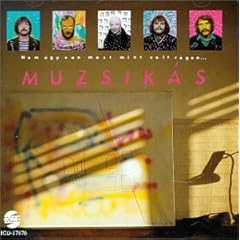
"Muzsikás - Within each genre that comes to North America as "world music," there is always one group of musicians designated as emissaries, virtually equated with that music for a time. In Hungarian folk circles, that group is Muzsikás".
01. Nem úgy van most, mint volt régen (It Is Not Like It Used to Be)
02. Adjon Isten minden jót (God Bless It All)
03. Tudod-e édesem (You Know Darling)
04. Mezöségi tánc (Folkdance)
05. Altató (Lullaby)
06. Félre gatya, pendely (I Want It All)
07. Vonat (Train - Bagpipe Improvisation)
08. Hulljatok levelek (Falling Leaves)
09. Legényes II (Lads Dance II)
10. Mikor mentem hazafelé (On the Way Home)
Musicians:
Márta Sebestyén - voice, recorder
Sándor Csoóri - guitar, hurdy-gurdy, viola, kobsa.
Éri Péter - double bass, buzuki, cello, viola, tambura, töröksip, folk shawm,
Dániel Hamar - double bass
Mihály Sipos - violin, zither.
Link
pass: bluesmen-worldmusic.blogspot.com
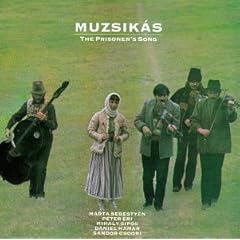
More great Muzsikás recording featuring Márta Sebestyén. A classic album originally released in 1986 and still sounding remarkable fresh and sweet.
"... Hungary's finest active folk troupe... inexhaustible themes handled by superb musicians."
"Hungary's leading folk ensemble..."
"The ebullient music must have been a shock to anyone who thinks that Hungarian music is gypsy violins... ... this raucously beautiful music..."
01. Rabnóta - Prisoner's Song
02. Eddig vendég - The Unwelcome Guest
03. Azt gondoltam, eső esik - I Thought it was Raining
04. Hidegen fújnak A szelek - Cold Winds are Blowing
05. Bujdosódal - Outlaw's Song
06. Repülj madár, repülj - Fly Bird, Fly
07. Régen volt, soká lesz - It was Long Ago
08. Szerelem, szerelem - Love, Love
09. Én csak azt csodálom - I Am Only Wondering
10. Elment a madárka - The Bird Has Flown
Musicians:
Márta Sebestyén - voice, recorder
Sándor Csoóri - bagpipe, viola, hit gardon, koboz, voice
Péter Éri - double bass, buzuki, cello, viola, tambura, zither, Turjkish pipe, voice
Dániel Hamar - double bass
Mihály Sipos - violin
Guests:
Antal Rácz - zither
Levente Szörényi - drums, bass guitar, voice
Szabolcs Szörényi - Bass guitar
Zoltán Zsuráfszki - dance
Link
