



 Posts
Posts





Live Recording May. 6. 2009, NPR Brodcast from Jordan Hall, Boston.
“Having always felt intimate with Bartók's as well as gypsy music of the roma, I've thoroughly enjoyed playing this recording, loud. It helps to have recently read "Bury Me Standing"- comes from the saying, "Bury me standing, I've been on my knees all my life".”
"The acclaimed Takács String Quartet joins the Hungarian folk ensemble Muzsikás (with singer Márta Sebestyén, whose inimitable voice you may recall haunting the soundtrack to "The English Patient") to celebrate Hungarian composer Béla Bartók...
When the members of the Takács Quartet and Muzsikás combine for a concert, they delight in making clear the connections between Bartók's own music and his folk-music obsessions. For example, they alternate movements from some of Bartók's best-known pieces (Romanian Folk Dances, String Quartet No. 4) with the real village dances he collected in the field — both the actual old scratchy records and their own live versions thereof..."
Tracklist / Concert program
Bartók: Violin Duos
Track 01.
- Torontal Dances (Muzsikás)
- "Ardeleana" (historic Bartók field recording)
- Duo No. 44
Track 02.
- "Shoe of My Horse" (Márta Sebestyén)
- Duo No. 28
- Duo No. 32
- "Jocul Barbatesc" (Márta Sebestyén)
Track 03.
Bartók: Sonatina (with traditional tunes)
- Bagpipes (Takács Qt.)
- Bear Dance (Takács Qt.)
- Bear Dance from Gyimes (Muzsikás)
Track 04.
Traditional: Ballad of the Murdered Shepherd
Track 05.
Bartók: Romanian Folk Dances (with source tunes)
- Bota es Invertita (Muzsikás)
- Stick Dance (Takács Qt.)
- Waistband Dance (Takács Qt.)
- "Pe Loc" (Muzsikás)
- Hornpipe Dance (Takács Qt.)
- Romanian Polka (Takács Qt.)
Artists:
Takács String Quartet (Takács Vonósnégyes)
Muzsikás with Márta Sebestyén (Muzsikás együttes és Sebestyén Márta)
Link
pass: bluesmen-worldmusic.blogspot.com

Classic Muzsikás from the beginning of their career, at the start of the Táncház revival. Essential listening for anyone interested in Hungarian Folk Music today.
"... Hungary's finest active folk troupe... inexhaustible themes handled by superb musicians."
"The ebullient music must have been a shock to anyone who thinks that Hungarian music is gypsy violins... ... this raucously beautiful music..."
01. Lóra csikós (To Horse, Herdsman) Szatmár
02. Elment az én rózsam (My Sweetheart Has Gone Away) Szlavónia
03. Uccu, tedd rá (Get On, Put It On) Dél-Dunántúl
04. Széki táncrend (Programme of Dances From Szék)
05. Dudanoták (Bagpipe Songs) É-Magyarország
06. Héjsza (Hey-Ho) Gyimes
07. Indulj el egy úton (Start Out On A Road) Moldva
08. Virágok közt virág voltam (I Was A Flower Among Flowers) Mezőség
09. Gyimesi dallamok (Gyimes Tunes)
10. Bonchidai román forgatós(Romanian Dance From Bonchida) Mezőség
11. Dorombjáték (Playing The Jew’s harp)
12. Egyedem, begyedem (Children’s Games)
Sándor Csoóri - bagpipe, hurdy-gurdy, viola, drum, kobsa
Péter Éri - double bass, buzuki, cello, viola, tambura, töröksip, folk shawm
Dániel Hamar - double bass
Mihály Sipos - violin, flute, drum
Link
pass: bluesmen-worldmusic.blogspot.com

"Despite the best efforts of Romania's Ceaucescu dictatorship to make Transylvanian folk culture disappear, it survived at least in part due to the very deprivations (e.g., the lack of electricity and education) that were intended to destroy it. This well-known Hungarian quintet began rooting around in the one-time Hungarian territory a decade ago, and their first collection of Transylvanian tunes is a deep and diverse treasure trove of nearly forgotten centuries-old acoustic history. A droning hurdy-gurdy introduces a song about the "damned misery of love"; a pair of fiddles rouse dancers to high-stepping wedding and Christmas dances; a sad string quartet accompanies a song describing "The Time of Autumn" when conscripted soldiers left their villages. And, as with all Muzsikas's albums, Marta Sebestyén's wise and clear and cold voice re-creates another world in your living room."
01. Betyárnóta
02. Istenem, Istenem
03. Kalotaszegi legényes
04. Szapora
05. Bodomkuti hajnali
06. Ősz az idő
07. Kati - Kata
08. Boncidai cimbalmos
09. Régi somogyi énekek
10. Régi lakodalmas
11. Ha felmegyek Kolozsvárra
Sándor Csoóri: viola, bagpipe, violin
Péter Éri: guitar, kaval, viola
Dániel Hamar: double bass, gardon
Mihály Sipos: violin
with
Márta Sebestyén: voice
Link
Original uploader: gyöngy. Thanks!

"Everybody knows klezmer music, but what we can hear on this exceptional album is the ancestor of klezmer - the forgotten old Jewish music of the Carpathian Basin.
Muzsikás has recoded these songs after years of research, which produced interesting results - for example collecting music from gypsies, authentic players of klezmer, or finding instruments such as the guitar-like 'zongura' or drum with cymbal. The results of this research are all here on this wonderful album.
The beautiful trustworthy voice of Márta Sebestyén brings a special breath to this recording."
01. Khosid Wedding Dances
02. The Rooster Is Crowing
03. Dance From Máramaros
04. Lamenting Song
05. Ane Maamin
06. I Have Just Come From Gyula
07. Farewell To Shabbat
08. Jewish Dance From Szászrégen
09. Hat A Jid A Wejbele
10. Jewish Csárdás Series From Szék
11. Khosid Dance
12. The Greeting Of The Bride
13. Haneros Halelu
14. FareWell To The Guests
Musicians:
Sándor Csoori - violin, viola, guitar
Péter Éri - Guitar, Kaval, Viola
Dániel Hamar - Double Bass, Gardon
Mihály Sipos - Violin
Guests:
Márta Sebestyén - voice
Csaba Ökrös - violin
Gheorghe Covaci - violin
Arpaf Toni - cimbalom
Gheorghe Florea - 'zongura'
Ioan Florea - drums
Link

„In the early 1970’s, young urban Hungarians began to rediscover folk music and traditions. It was the time to the „folk music new wave”, and we ourselves, who had grown up in families that loved and respected folk music, song and dance, were among the first to attempt to master the techniques of instrumental Hungarian folk music.
We regularly visited village musicians in Transylvania and other Hungarian speaking areas. These „muzsikás” people tried to pass on their knowledge to us, which they did with great affection and patience. We can never be bored by this music. We listen to it at home, in our cars, on aeroplanes and we give it to our friends for Christmas. The music on this CD derives from Gyimes, Ördöngősfüzes and Kalotaszeg, and derives from some of our earliest folk music experiences. Transylvanian instrumental music embodies centureies of aesthetic values. In our concerts, we have repetadly had the experience that these melodies, reflecting essentially pure feelings and irresistible impetus are able to powerfully communicate to people, no matter where in the world they are from.
On this alum, we amimed to play and sing as our village masters did: all together, breathing as one, watching each other as we play, in order to express this music’s inner life.”
1. Füzesi lakodalmas / Wedding in Füzes village
2. Madocsai szőlőőrző / A song from Madocsa
3. Kerekes héja és sebes / Round dance of Gyimes
4. Édesanyám rózsafája / My mother's rosebush
5. Ej, de széles / Oh, the road is long
6. Ha én rózsa volnék / If I were a rose
7. Baj, baj, baj / Trouble, trouble
8. Gyimesi dallamok / Cry only on Sundays
9. Ej, csillag, csillag / Oh, Morning Star
Mihály Sipos - violin
Sándor Csoóri Jr. - violin
Péter Éri - violin, viola, mandolin, double bass, lute, bell
Dániel Hamar - double bass, hit-gardon, hammer dulcimer
Guest:
Márta Sebestyén - voice
with:
László Porteleki - violin
Anna Helbich - vocals
Katalin Gyenis - vocals
Eszter Eredics - vocals
Ildikó Tóth (Fecske) - vocals
Zoltán Farkas (Batyu) - hit-gardon, drum, dance-noise
Márton Éri - viola, cello
András Berecz - khoomei, thorat singing
Antal Rácz - zither
Link

Muzsikás
Muzsikás in this, their 35th year. This is the group of artists who put Hungarian folk music on the international map. With their collaborations with Márta Sebestyén, and now in their superlative work since she departed, they have been the foremost ambassadors for music from Hungary, with a special emphasis on music from Transylvania. "Without Muzsikás, the Hungarian "táncház (dancehouse)" movement, the special Hungarian klezmer-revival and the bridge between Hungarian folk music and Béla Bartók's work would not exist," says Csaba Lokös, Promoter of the world music stage at the Sziget Festival and a long-term collaborator with the artists.
In an essay to be published in the WOMEX 08 Guide, Joe Boyd, whose Hannibal label released the artists internationally from 1987-2001, writes, "Exposure on the world stage certainly bestows pride and confidence on beleaguered traditional cultures, be it the Garifuna people of Central America, the Griots of West Africa or Occitan speakers of the Mediterranean coast of France. But it is not often that music places itself at the centre of the most important issues of the day, and even rarer that that music touches the hearts and minds of those both within the culture and those who have only the vaguest notions about it. The Hungarian group Muzsikás, recipients of this year’s Womex Award, has accomplished all of that and more.
"They began their careers at a time of political tension and conflict over culture far more intense than anything most of us have experienced," continues Boyd. Under Soviet control, "most urban residents' idea of their own folk music was shaped by the stodgy, choreographed, fake music performed by state, regional and local ensembles." The emphasis was on dance and, under the Soviets, they were stereotypically stylised. In Budapest, "the small 'Bela Bartok' dance ensemble came up with the radical idea to go into the villages and observe how people danced in the countryside. The resulting performances were so radical that an outraged state ensemble challenged them to a 'dance-off'. The audience booed the state ensemble off the stage, and the great Hungarian 'dance-house' movement was born."
From within the movement, the members of Muzsikás met, joined up, and made history. "One idea favoured at these early dances," says Boyd, "was that musicians must learn to dance and dancers must learn to play - it was impossible to do either with real feeling unless you understood both sides of the bandstand." With that pact came the birth of the new Hungarian folk music scene.
László Marton Távolodó, journalist and Artistic Director of The Sziget Festival world music stage, sees their contributions spread evenly over their many years of activity. In 1977 their first album launched the Living Hungarian Folk Music series, putting on vinyl the music that would influence generations to follow. At the beginning of the '90s, says László, "Muzsikás also helped strengthen the international klezmer-revival. Their "Máramaros - The Lost Jewish Music of Transylvania" album from 1992 contained not only touching and lively music, but it is also of great significance to music history." This was a remarkable project where the artists, still joined by Márta Sebestyén, went searching throughout Máramaros in Transylvania, finding aged Roma musicians who still remembered the tunes played by Hungarian-Jewish musicians 30-40 years before. "The album recalls these tunes," explains László, "witnessing the existence of a special Hungarian-Jewish instrumental music which had particular characteristics in comparison to the better-known Hungarian and Jewish folk music." And so a music that would have disappeared altogether in a matter of a few more years was brought back to life on the international stage. Then 1998 brought yet another major milestone, "The Bartók Album" that "reconstructed the experiences of Béla Bartók as folk music collector, recalling the particular music that so inspired Bartók" in some of his key compositions. The renown that came from the project, he says, "inspired Muzsikás to take further steps in exploring the meeting ground between classical and folk music." as well of the Finnish folk scene itself. Mission accomplished.
In recent years, says Joe Boyd, some members have gone and others joined, but the core remains intacts, as does the vision. "Whatever their line-up, they inspire, they communicate and they bring a sense of history, both ancient and modern."
"If you want to hear Hungarian traditional music at its best then start with Muzsikás," says Songlines editor Simon Broughton. "They can play with the authenticity and energy of a real village band, but also make sense of that music for an international audience in a big concert hall. Muzsikás know their music inside out - they have been to the Transylvanian villages where it is played and have worked with the master musicians who live the music. In Hungary, the band have brought traditional Hungarian music to thousands of school kids showing its beauty and relevance. Sadly, as the villages of Romania catch up with the rest of Europe, this music is disappearing. The international success of Muzsikás not only makes the music better known, but helps it survive at source as people realise that it has a value internationally."
"Muszikás didn't only bring this gift to the people of their land," says Mondomix Editor Benjamin MiNiMuM, "they shared it with the whole wide world. They not only presented us one of the most moving voices of our era, when they played with Márta Sebestyén, but introduced us to the roots of klezmer music as played in Transylvania, and so, too, the wonderful tradition of Táncház music and dance. Yes we are so blessed that Muzsikás exists."
"We take so much now for granted," says Boyd. "Listening to Muzsikás connects us to a time and a place when music was intrinsically a political statement and playing your instrument a certain way was a courageous act. The intensity of those times has never left Muzsikás and we remain lucky to be able to commemorate the spirit of those times and these wonderful musicians with this award."
Muzsikás will be performing live at WOMEX to close the Sunday Awards ceremony on the 2nd of November 2008.
The WOMEX Award is now ten years old. In the past we have alternated our honours between the extraordinary artists and professionals from our community. This year we have decided to present two WOMEX Awards, one to Muzsikás and the other to the folk music department of the Sibelius Academy in Helsinki, Finland."

MUZSIKÁS is the most popular and most renowned ensemble in Hungary and worldwide playing the traditional Hungarian folk music. Their performance is an exciting musical experience, the audience are transferred back to the remote Hungarian village atmosphere where the traditions survived the centuries.
MUZSIKÁS is the name given to musicians playing traditional folk music in Hungary in villages. The formation of the MUZSIKÁS Ensemble coincided with the European revivalist movement of the seventies whereby interest lied not only in the traditions, but also the roots of culture.
The members of the group play and improvise in the style of old traditional Hungarian folk bands in which the solo violin and the song typically were accompanied with the three-stringed viola and contrabass. The musicians also play other instruments which enables them to produce an extensive range of exciting and unusual colour tones. The music of MUZSIKÁS can be characterized as the traditional arrangements of authentic Hungarian folk music featuring a playing style typical of the best village musicians. It has nothing in common stylistically with the Gypsy-Hungarian style, but is rather the true folk music of Hungary, the most beautiful melodies of which were considered by Béla Bartók to be equal with the greatest works of music.
01 - Füzes lakodalmas
02 - Kerekes héjsza és sebes
03 - Baj baj baj
04 - Sűrű és ritka magyar
05 - Ej de széles
06 - Gyimesi verbunk
07 - Rákoczi mars
08 - Édesanyám rózsafája
09 - Gyimesi lassú magyaros
10 - Szállj el madár
Part 1.
Part 2.
Original Uploader: flehel. Thanks!

Bringing together Bartók's folk music collections and his classical compositions to create a new living tradition in Hungarian folk music. This unique project could only be achieved by Hungary's foremost folk ensemble, Muzsikás.
They are joined by Márta Sebestyén and Romanian born classical violinist Alexander Blanescu. Together they recreate what Bartók heard, how he incorporated this in his own compositions and how a Muzsikás themselves interpret the music.
"Now, when I work with Muzsikas ensemble, I feel that something important is happening to me. I can feel just how important for me is the cultural background against which I grew up, the area from where I came."
"This CD is an exploration of the close relationship between the composer Béla Bartók and folk music. It is an exploration seen through the eyes of the Muzsikás group. In our CD, we are searching for the answer, what is it in folk music, that attracted Bartók like a magnet?"
01. Elindultam a hazámból / I left my homeland
02. Mérai lassú csárdás és szapora / Dances of Kalotaszeg
03. Pásztornóták hosszúfurulyán / Long flute melodies
04. Forgácskóti legényes / Lads' dance called "Forgácskúti"
05. Pejparipám rézpatkója / The shoe of my horse
06. Bartók Béla: 28. duó "Bánkódás" / Béla Bartók: Duo No 28. "Sorrow"
07. Bonchidai ritka magyar / Slow dance of Lads' from Bonchida
08. Porondos víz martján / At the waterside
09. Kanásztáncok két hegedűn / Swinheards' dance
10. Jocul barbatesc
11. Bartók Béla: 32. duó "Máramarosi tánc" / Béla Bartók: Duo No 32
12. Máramarosi táncok / Dances of Máramaros
13. Botos tánc "Jocul cu bata" / Bota
14. Torontáli táncok / Dances of Torontál
15. Ardeleana
16. Bartók Béla: 44. duó "Erdélyi tánc" / "Transylvanian Dance"
17. Füzesi ritka magyar / Lads' dance from Füzes
18. Pe loc
19. Magyarbecei öreges csárdások / Music of Magyarbece
20. Dunántúli ugrósok / Transdanubian "ugrós"
21. Dunántúli friss csárdások / Fast csárdás
22. A temető kapu / Churchyard gate
Mihály Sipos - violin
Péter Éri - viola, violin, kaval, guitar, percussion
László Porteleki - violin
Dániel Hamar - double bass, little cimbalom, beat gardon, percussion
Featuring:
Márta Sebestyén - voice
Balanescu Alexander - violin
János Köles Kovács - tambur
Zoltán Juhász - long flute
Márton Éri - cello
Zoltán Porteleki - cimbalom
Ildikó Tóth - dance
Zoltán Farkas - beat gardon, drum, dance
Part 1.
Part 2.
pass: bluesmen-worldmusic.blogspot.com

"Márta Sebestyén's first solo album features Muzsikás as her backing group and, indeed, largely follows in the mould of earlier Muzsikás albums. "Dúdoltam én" contains tracks with various approaches to Hungarian folk songs - the majority are performed with authentic traditional musical accompaniment, some have a modern musical arrangement and some are pure vocal performances with no music at all. The highlights of the album are the first and last tracks - both are among the finest of Sebestyén's career."
01. Vetettem Violát (A Violet I Planted) Moldva
02. Széki Magyar, A ‘Misié (Misi's Dance From Szék) Mezöség
03. Fúvom az énekem (I Sing My Song) Gyimes
04. Fehér galamb szállt a házra
(A White Dove Has Come) Mezöség
05. Hajnali nóta (Morning Song) Kalotaszeg
06. Egy pár tánc Mezöségröl
(A Couple’s Dances From Mezöség)
07. Szeress egyet, s legyen szép (Love Just One)
08. Három árva (Three Orphans)
09. Fújnak a fellegek (Dark Winds Come) Somogy
10. Teremtés (Genesis)
Musicians:
Márta Sebestyén - voice, recorder
Sándor Csoóri - guitar, hurdy-gurdy, viola, kobsa.
Péter Éri - double bass, buzuki, cello, viola, tambura, folk shawm,
Dániel Hamar - double bass
Mihály Sipos - violin, zither.
Guests:
Zoltán Juhász - recorder
Béla Halmos - violin
László Porteleki - violin
Csaba Ökrös - violin
Antal Fekete - viola
Katalin Gyenis - voice
András Berecz - voice
Link
pass: bluesmen-worldmusic.blogspot.com
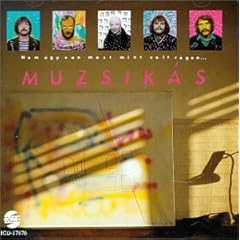
"Muzsikás - Within each genre that comes to North America as "world music," there is always one group of musicians designated as emissaries, virtually equated with that music for a time. In Hungarian folk circles, that group is Muzsikás".
01. Nem úgy van most, mint volt régen (It Is Not Like It Used to Be)
02. Adjon Isten minden jót (God Bless It All)
03. Tudod-e édesem (You Know Darling)
04. Mezöségi tánc (Folkdance)
05. Altató (Lullaby)
06. Félre gatya, pendely (I Want It All)
07. Vonat (Train - Bagpipe Improvisation)
08. Hulljatok levelek (Falling Leaves)
09. Legényes II (Lads Dance II)
10. Mikor mentem hazafelé (On the Way Home)
Musicians:
Márta Sebestyén - voice, recorder
Sándor Csoóri - guitar, hurdy-gurdy, viola, kobsa.
Éri Péter - double bass, buzuki, cello, viola, tambura, töröksip, folk shawm,
Dániel Hamar - double bass
Mihály Sipos - violin, zither.
Link
pass: bluesmen-worldmusic.blogspot.com
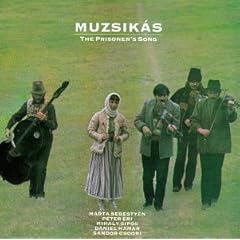
More great Muzsikás recording featuring Márta Sebestyén. A classic album originally released in 1986 and still sounding remarkable fresh and sweet.
"... Hungary's finest active folk troupe... inexhaustible themes handled by superb musicians."
"Hungary's leading folk ensemble..."
"The ebullient music must have been a shock to anyone who thinks that Hungarian music is gypsy violins... ... this raucously beautiful music..."
01. Rabnóta - Prisoner's Song
02. Eddig vendég - The Unwelcome Guest
03. Azt gondoltam, eső esik - I Thought it was Raining
04. Hidegen fújnak A szelek - Cold Winds are Blowing
05. Bujdosódal - Outlaw's Song
06. Repülj madár, repülj - Fly Bird, Fly
07. Régen volt, soká lesz - It was Long Ago
08. Szerelem, szerelem - Love, Love
09. Én csak azt csodálom - I Am Only Wondering
10. Elment a madárka - The Bird Has Flown
Musicians:
Márta Sebestyén - voice, recorder
Sándor Csoóri - bagpipe, viola, hit gardon, koboz, voice
Péter Éri - double bass, buzuki, cello, viola, tambura, zither, Turjkish pipe, voice
Dániel Hamar - double bass
Mihály Sipos - violin
Guests:
Antal Rácz - zither
Levente Szörényi - drums, bass guitar, voice
Szabolcs Szörényi - Bass guitar
Zoltán Zsuráfszki - dance
Link
