



 Posts
Posts





Magyar Dudazenekar: Dudásom, dudásom...
The Hungarian Bagpipe Band: Bagpiper, My Bagpiper...
2
Comments

Complementing the Duda (Hungarian Bagpipe) playing on this CD release is some fine singing and other traditional folk music instruments.
Boosting members such as Sándor Csoóri (ex-Muzsikás, now with Ifjú Muzsikás) and György Lányi (Téka Ensemble) this bag-pipe project was always going to produce something interesting. Formed in 1989 they have learnt their folk music from the undisputed masters of the Hungarian Duda: Imre Seres (Közeptúr, Hont region ,Transylvania), János Szikora (Palást, Hont region, Transylvania), and István Pál (Tereske, Nógrád region, Transylvania). The work of these master live on in the recording by the Hungarian Bagpipe Band.
On their concerts they show the leather bagpipe and the bagpipers tunes and make the public aquainted with the traditions and legends which connected with this mistycal instrument. Their first album compilated 15’th years performances.
01. Aki dudás akar lenni
02. Táncolj kecske
03. Betyár nóta
04. Hopp Sári
05. Vörös bíró
06. Palásti dallamok
07. Megütik a dobot
08. Pál István nótái
09. Karácsonyi dallamok
10. Jankovics Imre nótái
11. Aranyalma
12. Dudásom, dudásom
13. Vékony János nótái
14. Dudahimnusz
István Adorján - bagpipe, chained staff
Botond Bese - bagpipe, voice
Sándor Csoóri Jr. - bagpipe
Balázs Istvánfi - bagpipe, koboz
Zoltán Karakas - kanásztülök, voice
József Kozák - bagpipe, flute, drum, bass bagpipe
György Lányi - bagpipe, voice, drum, bzugony
Dongó Szokolay - bagpipe
Végh Andor - bagpipe, turkish whistle
Károly Vladár - bagpipe, voice
Szilvia Bognár - voice
Boglárka Csonka - voice
Orsolya Strack - voice
Link
pass: bluesmen-worldmusic.blogspot.com

Gogol Bordello is a multi-ethnic Gypsy punk band from the Lower East Side of New York City that formed in 1999 and is known for its theatrical stage shows. Much of the band's sound is inspired by Gypsy music, as its core members are immigrants from Eastern Europe. The band incorporates minor-key accordion and fiddle (and on some albums, saxophone) mixed with cabaret, punk, and dub as well as multiple languages. Phill Jupitus has described the band as "a bit like The Clash and The Pogues having a fight... in Eastern Europe."
01. Sacred Darling
02. Voi-la intruder
03. Greencard husband
04. Passport
05. Start wearing purple
06. Shy kind of guy
07. Mussolini vs. Stalin
08. Letter to mother
09. God-like
10. Nomadic chronicle
11. Letter to castro (costumes for tonight)
12. Unvisible zedd
13. Sex spider
14. No threat
15. Against the nature
Part I.
Part II.
pass: bluesmen-worldmusic.blogspot.com

The band Leningrad was set up by Sergey Shnurov (a.k.a. Shnur) in St. Petersburg in 1997.
Leningrad's line up has changed quite a few times, although their backbone has always remained guitars, drums and a strong brass section. Sometimes keyboards were added, an accordion, double bass, xylophone, balalaikas or even a singing saw. Their last massive line up changes occurred in 2002. Shnur recorded the album 'Piraty XI veka' together with the musicians of St. Petersburg ska band Spitfire. Soon the whole Spitfire gang became part of Leningrad, which again significantly raised the musical level.
01. WWW
02. Bljadi
03. Pidarasy
04. Komon evribadi
05. Sobaka Baskervilej
06. Rezinovyj muzhik
07. Mne by v nebo
08. Ljudi ne letajut
09. U menja est' vse
10. Novyj god
11. Banany
12. Bez tebja
13. Privet, Dzhimmi Hendriks
Link
pass: bluesmen-worldmusic.blogspot.com

Zurgó was formed in 1993, in Budapest, in Hungary.
The members' aim is to collect the music of the "csángó" - a Hungarian minority living in Romania - to present it in concerts and thus preserve it for the coming generations.
In 2004 the Zurgó became the first Hungarian folk group to be given the Bezeredj Award of Ministry of Cultural Heritage, and in 2007 the Zurgó was awarded the title Béla Bartók Prize by the Advisory Board of Hungarian Arts Award.
"On the present album we invoke Gregorian melodies, ballads, laments and love songs, dance melodies of medieval, renaissance and modern origin, recalling the festivities, joy and sorrow of generations that have passed. All this is music of the Hungarian speaking minority in Moldva (Moldavia), Romania, the Csángó people, that we have been collecting from their elders and their grandsons and granddaughters. The past has a message for the present in all these wonderful melodies, the heart of time is beating in them."
The Zurgo Ensemble on this CD release present the music and traditions of the ‘Csango’ Hungarians living in Moldavia. Since 1992 they have collected dance music and songs from the Moldavian Csangos and play them on traditional instruments such as the violin, kaval, kobza, whistle and drum etc. In their native Hungary they are regular performers of their art and have appeared on many radio and television programmes.
The "Csángó"-s
Moldavia is the territory, beyond the East Carpathian mountains, belonging to Romania today, where there were Hungarians arrived in several waves. From the 13th to the 18th centuries there were several migrations of Hungarian settlers to Moldavia. Their descendants are the people we call 'Csango' today.
They established their own settlements in Moldavia and have preserved their independence from the Orthodox Moldavian Romanians. Thus their culture has medieval European and Asian elements as well as Romanian, Balkanian, Slav and Turkish ones due to living close to those peoples. This is true for the music, as well as the dances, that are diverse even in their forms: beside round and pair dances, the so - called chain or line dances are also characteristic. Gregorian melodies, laments, ballads and new-style folk songs can be found in their culture as well as chain and line dances of ancient origin, the renaissance 'kettős'- a walking and fast couple dance-and the 19th-century Hungarian csardas.
On 23rd May 2001, the Permanent Committee of the General Assembly of the European Council accepted the Finnish Tytti Isohookana Asunmaa's report which stated that the Csangos of Moldavia speak a former version of Hungarian and have archaic traditions, colourful folk art and culture which are of special importance for Europe.
01. Magyaros - Old Hungarian dances
02. Antaloké - Two Antals' melodies
03. Györgyi Ilonával - At the end of the garden...
04. Nunta - Wedding (5'48")
05. Vőlegénysirató - Mourning song
06. "Fenn a csillag, fenn az ég..." - Stars and the sky above
07. "Szeretőm e táncba..." - My lover in the dance...
08. Márton víg Gergele - Gergely's song
09. Juhajgatás - Shepherd's song
10. "Ha folyóvíz volnék..." - If I were a river...
11. Kyrie eleison
12. Havajgatás - Consolation
13. Szép asszonyok éneke - Song of the witches
Musicians:
Lídia Draskóczy - fiddle
Andrea Navratil - voice
Félix Benke Ágoston - drum, jew's harp, leaf whistle
László Demeter - koboz (lute)
Bercel Nagy - wooden whistles, tale-teller
Csaba Sófalvi Kiss - wooden whistles, kaval
Guests:
Mária Petrás - voice
Géza Fábri - koboz, voice
Link
pass: bluesmen-worldmusic.blogspot.com

The band was formed in 1987 in the most underdeveloped - and culturally most authentic region of Hungary - in Szabolcs-Szatmár-Bereg county. Their name, PARNO GRASZT means WHITE HORSE: “White” as the symbol of purity, “Horse” as the symbol of freedom.
The core of the band consists of nine musicians, the expanded number is eighteen - including ten dancers of three generations – with ages from 10 to 72.
If a guest visits their small village in time of wedding, christening, funeral, ball or any other kind of ceremony, he will experience that the whole population takes part in the band - the instruments go from hand to hand and everybody is a dance master. Maybe this spirit of living tradition makes their concerts such a frenetic celebration.
The band adapted almost every Gypsy folk song from different parts of Hungary and also from the neighbouring countries. They play different communities' authentic music with the aim to save the traditions, the musical and dancing culture of the Gypsy society and to share them with the audience.
The band represents a special dialect of Gypsy music. Besides the typical tunes they take over Hungarian melodies into their songs. They have not only performed but also created folklore during the recording of their albums. They use traditional instruments like guitar, double bass, tamboura and also unique ones like spoons, water can, 'oral bass' and the taragot. These instruments are only known in original Gypsy folk music. The songs reflect a wide range of emotions of Gypsies.
Their first album was released in May 2002 by the renowned Hungarian folk label, FONÓ RECORDS. Not long after the official release the album hit Nr. 7 on the WORLD MUSIC CHARTS EUROPE which was at least surprising since never before any Hungarian bands got into the Top Ten. Since then the songs of Parno Graszt are being played continouosly by numerous European world music radio stations.
01.Rávágok a zongorára
02.Tu zsanesz - Te tudod
03.Zsotar - Elmegyek
04.Majdik aba szokero - Majd megnézem, mit csinálok
05.Kodi phenel mange - Azt mondja nekem
06.Odi phenel cino savo - Azt mondja a kisfiam
07.Szajbőgő improvizacio
08.Te na mero - Ne haljak meg
09.Khade sukar - Igy szép
10.Dikho aba le cserhaja - Nézem a csillagos eget
11.Khele le cinisej - Tancol a ciganylay
12.Ratyake phiro - Este járok
13.Sukar szi muri romnyi - Szép a feleségem
14.Retyija pijo - Pálinkat iszok
15.Vojake save - Jókedvű fiúk
16.Cirde muri giji - Húzd el a notámat
17.Ande gava - Jarom a falut
18.Dhukal muro jilo - Fáj a szivem
19.Parno graszt - Fehér ló
20.Paszabi pergető
21.Szaszman Devla Piranyi/Volt szeretőm
József OLÁH (tamboura, guitar, vocals)
Géza BALOGH (guitar, vocals)
János JAKOCSKA (guitar, vocals)
János OLÁH (double-bass, vocals)
István NÉMETH (water cans, oral bass)
Sándor HORVÁTH (vocals, spoons)
Krisztián OLÁH (accordion)
Mária BALOGH (vocals)
Mária VÁRADI (vocals)
Guests:
László FEHÉR - taragot
Kálmán BAKOS - viola
Part I.
Part II.
pass: bluesmen-worldmusic.blogspot.com

"Nothing can inspire an artist more than being challenged. The artist in question is Nikola Parov, New York based and playing in the world-famous formation RIVERDANCE."
Nikola Parov is a featured artist in the Riverdance Orchestra, playing a wide variety of instruments: kaval, gadulka, bouzuki and gaida. As well as recording with Bill Whelan, Andy Irvine, Zsarátnok, and Márta Sebestyén and composing dance music for the Hungarian State Folk Ensemble.
“Budapest producer, Nikola Parov, not only constructs modern chamber-folk arrangements... but also plays a staggering array of instruments himself.”
1. Anonym
2. Trance Danubius
3. Diva's Smile
4. Mayo Woman
5. Satyr's Night
6. Tsami
7. Ritual
8. Passio
Musicians:
Nikola Parov - vocals, acoustic guitar, oud, bouzouki, gaida, kaval, gadulka, flute, tin whistle, clarinet, piano, keyboards, programming, percussion
Berecz András - vocals
Des Moore - electric guitar
Zoltán Lantos - violin
Mairtin O'Connor - accordion
Davy Spillane - pipes
Kenneth Edge - soprano saxophone
Ferenc Kovács - trumpet
Ottó Rácz - oboe
Noel Eccles - drums, timpani, percussion
Link

"The second record by Montreal's Black Ox Orkestar places the group at the forefront of a 'new Jewish music' that rejects contemporary fusion and musty nostalgia in equal measure. With backgrounds in folk, punk-rock and free jazz, the group's four musicians distill Balkan, Central Asian, Arabic and Slavic sources into a coherent, impassioned sound that gives teeth to old Jewish songs. Never relying on museum-piece reverence or an obvious, forced collision of musical forms, Black Ox is rewriting a Yiddish songbook in ways that sound organically anchored to tradition without being suffocated by it. Nisht Azoy (Not Like This) builds dramatically on Black Ox's debut (Ver Tanzt?), striking a similar balance between vocal and instrumental tunes, but with more intensity, mystery, and a readiness to stretch things out, whether in the incantatory opener "Bukharian" or the clomping crescendos of "Az Vey Dem Tatn" and "Tsvey Tabelakh". Further upping the ante with greater use of percussion and group singing, the band's entirely acoustic instrumentation pumps and pulses with explosive energy and emotion. Radwan Moumneh captures the 4-piece band (at Montreal's Hotel2Tango studio) with a detailed warmth and authority, and a large cast of guest players expands the group to bona fide orchestral size on "Tsvey Tabelakh". The slow plaintiveness of vocal songs "Ikh Ken Tsvey Zayn" and "Golem" rank among the group's most spine-tingling, mesmerising moments. "Ratsekr Grec" summons a Balkan dance rhythm in one of the album's more overtly traditional arrangements, adding a flurry of colliding horns down the home stretch. Taken as a whole, the cycle of songs on Nisht Azoy further opens up a world, inspired by Jewish diasporic culture and politics, that challenges conventional appropriations and forges music that is highly original, deeply felt and very much alive. As the band writes: "Nisht Azoy is the melancholy and uncompromising sound of our mongrel music splitting at the seams, the boat creaking as we drag our friends on board. As we sing in Tsvey Taybelakh: 'When you come to a strange city, my love / Think of my words / When you come to deep waters, my love / You will not drown in sorrow / When you come to great fires, my love / You will not be burnt in sorrow.'"
1.Bukharian
2.Az Vey Dem Tatn
3.Violin Duet
4.Ikh Ken Tsvey Zayn
5.Ratsekr Grec
6.Tsvey Taybelakh
7.Dorbriden
8.Golem
Link

"Where the previous two albums from Leicestershire based A Hawk And A Hacksaw were dark and dusty delights that happily referenced such disparate genres as the Spaghetti Western, Captain Beefheart and Raymond Scott, their new LP 'The Way The Wind Blows' is a far lighter affair that shifts it focus squarely onto folk traditions. Sharing two members with Beirut (Jeremy Barnes and Heather Trost), A Hawk And A Hacksaw explore a similar aural topography - with the opening 'In The River' full of lazy horns, wheezing melodies and waltzing accordion, all of which conspire to create a wonderfully rolling Bavarian folk atmosphere. Partly recorded in a remote Romanian village with members of Fanfare Ciocarlia (recent winners of Best European Artist at the Radio 3 World Music Awards), 'The Way The Wind Blows' really does sound timeless; conjuring up images of dusky mountains and bustling villages. Choosing a dramatic stomp that has a distinctly Turkish flavour, the title track is a rich and rimy affair that juxtaposes an ominous accordion line with some piquant strings which prevent the piece becoming dour or overcast. From here, 'Song For Joseph' introduces militaristic drums to a pathos drenched vocal that will keep pulling you in despite its poignant undertow, 'God Bless The Ottoman Empire' is a jaunty slice of indie-folk that wouldn't sit out of place on college radio, whilst 'GaDJe Sirba' cross-breeds Eastern Europe with Duke Ellington style horns. It works far better in the ear than it does on paper... Closing with the couplet of 'Salt Water' and 'There Is A River In Gailsteo' (the former a brooding piano and string epic, the latter a tender shimmering lament), The Hawk And The Hacksaw have made an album that sticks to its musical ethics doggedly whilst losing not a jot of listenability."
01.In The River
02.Way The Wind Blows
03.Song For Joseph
04.Fernando's Giampari
05.God Bless The Ottoman Empire
06.Waltz For Strings And Tuba
07.Oporto
08.Gadje Sirba
09.Sparrow
10.Salt Water
11.There Is A River In Galisteo
Link

Yat-Kha come from Tuva, out on the borders of Siberia and western Mongolia. They dress like throw-backs to the hippy psychedelic era, and create some of the most extraordinary noises on the planet. Albert Kuvezin is an exponent of the local style of throat-singing, which allows the performer to hold more than one note at once while producing surely the deepest growls on record. He is also a guitarist who likes to switch between gentle acoustic passages and frantic electric solos, and he leads a band that also includes such traditional Tuvan stringed instruments as the Igil. The resulting songs are gloriously exhilarating, being at their best treating Tuva's gutsy traditional songs to the trademark blend of wild rhythm and growls. These range from exuberant growled rockers like Come Along to slow growled ballads, all with lyrics in English and sounding as if he is desperate to join the western pop mainstream.
01. Come Along / A.Kuvezin
02. Amby Baryp / trad.arr.A.Kuvezin-K.Mongush
03. Langchyy Boom / trad.arr. YAT-KHA
04. Carry Me Through / A.Kuvezin
05. Dorug Daiym / trad.arr. YAT-KHA
06. Coming Buddha / A.Kuvezin
07. Eki Attar / trad.arr. YAT-KHA
08. The Steppe, The City, The Sea / A.Kuvezin
09. Uzhur-La Bar / A.Kuvezin
10. Khandagaity / trad.arr. YAT-KHA
11. Voyager / A.Kuvezin
12. Teve-Khaia / trad.arr.A.Kuvezin
13. Tuva.Rock / A.Kuvezin
14. Amby Baryp (remix) / trad.arr.A.Kuvezin-K.Mongush
Link

Soundtrack for 2006 film composed by Tony Gatlif (Gypsy music).
01. Tchiki Tchiki - Tony Gatlif, Beata Palya
02. Fureur - Tony Gatlif, Beata Palya
03. Mahala - Tony Gatlif
04. Le vent - Tony Gatlif, Beata Palya
05. Le chant du Pope - Tony Gatlif
06. Mamaliga - Tony Gatlif
07. Doina Ciorba - Sandu Ciorba, Tony Gatlif
08. La fête des masques - Tony Gatlif, Beata Palya
09. Je t'ai cherché - Tony Gatlif, Beata Palya
10. Le tzigane heureux - Tony Gatlif
11. Déchirant - Tony Gatlif
12. Tchiki Ciorba - Tony Gatlif, Sandu Ciorba
13. Le Regret - Tony Gatlif
14. Fureur intrumental - Tony Gatlif
15. Promesse Live - Tony Gatlif
16. Le souffle - Tony Gatlif
17. Libre Zingarina - Tony Gatlif
18. Promesse Tony - Gatlif, Beata Palya
Link

ALTAI THROAT SINGING
Back in ancient times Altai was populated by a spiritual civilization. At present the civilization is gradually fading away, but its glow still remains in the form of Altaikai throat singing. Altai kai nowadays is the bridge between the ancient spiritual world of Altai and modern civilization.
A throat singing band "AltaiKai" was founded in 1997. Its goal is conservation and development of the Altai traditional culture and customs. "AltaiKai" is:
- a prize-winner of All-Russia and international festivals and competitions;
- a member of the Russian Federation's folk-lore union.
- a member of the international organization of folk art of UNESCO.
- a winner of the UNESCO prize. Samarkand. 2001.
- a record-holder of the Guinness' "Book of the Achievements and Records" for the longest performance of throat singing in 2003.
- a gold medal winner of the Moscow "Delfiyski Plays" in 2000.
- a gold medal winner at the international festival of throat singing "Dyhanie Zemli" ("the Ground's Breath"). Ulan-Ude. 2005.
- a winner of the G.I. Choros-Gurkin's prize of the Republic of Altai.
The band performed in Russia, Kazakhstan, Kirgizia, Ukraine, Uzbekistan, Mongolia, Czech, Austria, Norway, Switzerland, Finland, Turkey and the USA.
The members of the group organized three throat singing festivals "Altyn Taiga", where representatives from the Republics of Tyva and Khakasia and such foreign countries as Japan, England and the USA participated.
Despite the fact that Altai throat singing is a tradition with centuries-long history, nowadays it is still a well-established and demanded part of contemporary world music.
01. Baatyrdyng Soozi (Warrior's Words)
02. Altaiym (My Altai)
03. Alkyshtar (Prayers)
04. Kara-suu (Spring Water)
05. Ulaganym jaanyr (Janger Style Song from Ulagan)
06. Shunu Baatyr (Shunu Warrior)
07. Komuzym, oino, oino (Play, Play, My Khomus)
08. Jebren kai la tunur (Ancient Kai Song amd Tunur-Drum)
09. Oyim, oyim
10. Jai (Summer)
11. Kaan Altai (Khan-Altai)
12. Juuchyldar (Hero-Warriors)
13. +Bonus Jai. Slush (Al Korchagin) feat. AltaiKai "Bathing birds remix".
Link

The Armenian Navy Band was founded by the percussionist/vocalist of Armenian descent, Arto Tunçboyaciyan. Music is a fundamental element of his life, by which he tries to communicate his greatest values:"love, respect and truth".
The group is composed of twelve Armenian musicians, among the best that live in Armenia at the moment. The compositions are all original of Arto Tunçboyaciyan which -using his words - "have the sound of my life".
This music is pervaded by sonorities taken from the Armenian and Anatolian tradition fused with elements coming from different musical experiences, amongst them jazz.
Arto's original compositions express the sound of the past generations along with today's life; this is what he calls "avant-garde folk". We can say that the Armenian Navy Band represents the synthesis of Arto's musical journey and life experiences. As an ensemble with particular virtuosity, it also has great ability in performing live music and compositions taken from the tradition and from the current culture of Armenia.
The musicians of this ensemble range from ages 20-45. The instruments vary from traditional: duduk, zurna, kemanche, kanun to contemporary: trombone, alto sax, tenor, soprano sax, trumpet, bass, drums, keyboard and piano. This ensemble together with the unique vocals and percussion and sazabo of Arto creates a musical journey of the past and present, bringing the sound into the future.
01.: They Love Me 15 Feet Away
02.: Rooster Run
03.: My Aunt Mary Doesn't Care About My Jacket
04.: Shadows Of Clean Spirits
05.: Can Money Buy Royalty
06.: Love Respects Truth
07.: Blue Chestnuts
08.: Kudumda
09.: Don't Go Far Away From Yourself
10.: ANB Sailing Song
11.: One Up One Down Sometimes Make A Left Turn
12.: New Apricot
13.: Let's Have Fun At The Border
MUSICIANS:
* Arto Tunçboyaciyan - Percussions, vocals, sazabo
* Anahit Artushyan - Kanun
* Armen Ayvazyan - Kemanche
* Armen Hyusnunts - Tenor & soprano sax
* Ashot Harutiunyan - Trombone
* David Nalchajyan - Alto sax
* Tigran Suchyan - Trumpet
* Norayr Kartashyan - Blul, duduk, zurna
* Vardan Grigoryan - Duduk, zurna
* Arman Jalalyan - Drums
* Vahagn Hayrapetyan - Piano, keyboards
* Vardan Arakelyan - Bass
Link

Beáta Salamon whose singing voice and virtuosity on the violin are the specialities of Méta founded the ensemble. This formation is working together since 1999. The very base of our work is playing in dance houses. We learn our musical repertoire from archive material and from our own collections. We try to pass on our personal experiences to our students in the art school, at our courses in folk music and in our summer camps.
In different plays, we have performed in the most popular theatres of Hungary. Our adventure into world music is the Heavy Méta formation, in which perform the experts of the Hungarian blues-life too. As a representative of the Hungarian folklore movement, our band regularly gives concerts at home and abroad and also performs at international festivals and musical competitions.
The important points in our career:
1983 The title of the "Young Masters of Folk Art"
1990 MTV (Hungarian Television) Competition for Folk Ensembles - first prize
1999 eMeRTon-Prize (Hungarian Radio Ltd.)
Our adventure into world music is the Heavy Méta formation, in which such experts of the Hungarian blues-life perform as Tamás Takáts, Zoltán Sipeki, György Ferenczi and Gábor Molnár.
01. Free bird
02. I like you
03. Mária,Mária
04. Pace
05. Love
06. Moldva
07. Pentecostal rose
08. Variations
09. Spring,spring
10. Black mourning
11. Manly
12. Paradise
Beáta Salamon-voice, fiddle - leader
Attila Gera-wind instruments
Zsolt Nagy-3 and 4 stringed viola, drum
Zoltán Porteleki-hammered dulcimer, hurdy-gurdy, viola
Mohácsy Albert-double bass, cello, koboz, gardon
Ferenc Németh-voice, drum
Link
pass: bluesmen-worldmusic.blogspot.com

This is a real curio! This disk in Switzerland in 1979, it was published in only some hundred copies. The music the folk the superb alloy of the rock and the jazz.
Az Unikumot a Gépfolklór együttesből kivált zenészek 1978-ban alakították. Az együttest előbb ismerték külföldön, mint itthon, nyugatnémet fesztiválokon vettek részt, 1979-ben Svájcban nagylemezük jelent meg, csupán pár százas példányszámmal, ez az egy lemezük létezik. Zenéjükben a folk, a rock és a jazz stílusjegyeit ötvözik.
01 Extase
02 Little Bird
03 Suite De Danses De Roumanie Et Dobrudza
04 Mon Coeur Soigne
05 Musique Bulgare
06 Crepuscule-Aube
07 Danses De Szatmár
Róbert György - drums, blockflute, voice;
Balázs János - violin, double bass, voice;
Matolcsy Eszter - violin, voice;
Dabasi Péter - mandolin, guitar, cello, voice.
Link
pass: bluesmen-worldmusic.blogspot.com

The story of Barbaro:
It was a new years eve party back in 1986 when Herpai and Jorgosz met. They had a blast… As a matter of fact they had so much fun that they decided to form a band. After the drunkennes was gone the plan was still alive and the band was coming together quickly.
In February of '87 in the basement of the Lágymányos Community Centre the "ancient" Barbaro started rehearsing. Sándor Cziranku - guitar, Sándor Herpai - drums, Miklós Lengyelfi II. - bass, Ökrös Csaba - violin and Tzortzoglou Jorgosz - lead vocal and derbuca. The Band first live gig took place at the Diósgyõr Folk Festival in the summer of '87. The Band's unusual sound was a huge success. The first formation of the group didn't live too long. First Ökrös, then Lengyelfi said good bye to Barbaro. They got replaced by Nikola Parov and Tamás Zsoldos.
Barbaro made its first album in 1990 with it's new line-up. The album contained covers of folk songs and it was released on Hungaroton Records. Titled simply: Barbaro I.
01 - Kerek a szöllö (Round Is The Grape)
02 - Haramia (Brigand)
03 - Bánat (Grief)
04 - Kórus (Choir)
05 - Elment az én rózsám (My Rose Is Gone)
06 - Adjon az Isten (God Give You)
07 - Kesergés (Lamentation)
08 - Gyere ki te (Come Out You)
09 - Barbár tánc (Barbaric Dance)
10 - Hösi ének (Heroic Song)
Link
pass: bluesmen-worldmusic.blogspot.com

"Folkrádió is a not-for-profit, 24-hour online radio service featuring traditional folk music. It primarily broadcasts Hungarian folk music, but music of other peoples and ethnic groups living in the Carpathian Basin, as well as other types of music of folk origin also can be heard on Folkrádió. The Folkrádió Foundation has been founded to maintain the radio and the website.
The idea of Folkrádió was born at the end of 2001. Since traditional folk music could hardly be heard on any channel, we felt it important to have a radio that filled this gap. After creating the necessary technical and legal conditions, on March 15, 2003 the first, experimental show went on the air. Folkrádió is run by enthusiastic folk music lovers who receive no compensation for their work. Currently the radio can only be heard online but we plan to launch the service via other channels as well.
In the meantime many supporters and volunteers have assisted the project. Among our professional supporters we are proud to mention the Hungarian Heritage House and the folklorist István Pávai whose advices and assistance means particularly much to us. We work together with a lot of folk music labels, musicians and collectors, therefore new releases appear almost immediately on our playlist.
The folkradio.hu domain name not only leads to a folk music radio channel but also includes a searchable folk music database and an Internet meeting place for folk music lovers. On our Hungarian-language pages visitors can also find lyrics, an event calendar, a press review, a photo gallery, links, a forum and a mailing list.
We hope Folkrádió will continue to spread and share the love for this beautiful music for a long time."
Folkradio

New acoustic music mixing Hungarian trad components into jazzish, eclectically influenced arrangements on sax, folk flutes, guitar, mandolin, percussion etc. Cellist Judit Bonyár's vocals move from trad through Piaf-esque to jazz. Ingenious and well played but seems so carefully planned and rehearsed it doesen't quite break loose and stir.
01 Esőtánc
02 Elrepülnék
03 Szerelem
04 Porba húzó
05 Elvirágzik
06 Jaj, de bolond
Judit Bonyár – vocal, cello, pipe
József Gáspár „Gazsi” - saxophone, flute, trumpet, vocal, mouth organ
Péter Hűvösvölgyi – guitars, mandolin
Zoltán Tóth „Csüli” - drums, percussion
Link
pass: bluesmen-worldmusic.blogspot.com

Journey in Gitania to obtain an insinght into the wonderful world of the gypsy folk music.
A cigány folklór eredendően világzene. Internacionalizmusát mi sem bizonyítja jobban, mint hogy a Vízöntő együttes Gitania Express című albumán a régi magyar udvarházak világa éppúgy megelevenül, mint a spanyol románcok esengése.
01.Jabipapi
02.Coki kutya (Be off Dog)
03.Álom álom (Dream Dream)
04.Árva árva (Orphaned)
05.Kirci kondás (Swineherd You)
06.Cigány valcer (Gypsy Waltz)
07.Fáj a kutyámnak (My Dog`s Foot)
08.Üssetek verjetek (Give me a Good Drubbing)
09.Uccu kurva (Get on You Whore)
10.Szilvaédes (Plumpsweet)
11.Azt hittem (I Thought)
Link

Ando Drom (On the Road) Gypsy folklore group was founded in Budapest 1984. This was their first release and is on their own label. They make their own arrangements as well as composing their own material. The songs are sung in Gypsy Language, accompanied by guitar, mandolin and tambura; for percussion they use spoons, jugs, wooden through and oral bass.
The group generally performs with 8 members, but for their concerts they also often invite young talented Gypsy musicians as special guests.
Since the members come from different segments of the Hungarian Gypsy population, the group presents a wide range of styles and variations within Gypsy music and culture.
They present the traditional music and dances of the Gypsy people in an authentic and, at the same time, modern way. In addition to their concert tours abroad, they often perform in Hungary, where Ando Drom is considered to be one of the most renowned Gypsy folklore groups. They were honoured twice with "Nívó-díj", a high Hungarian musical award.'
01 - Mori Gázshi (My Wife)
02 - Bajba, Bajba Pélem (I Got into Trouble)
03 - Zöld az erdő (Green Is the Forest)
04 - Lindráji Szi Ádi Gilyi (Sleepy Is This Song)
05 - Ná Kámel Tná (Does Not Love Me)
06 - Áháj Delvá (Oh My God)
07 - Pundela
08 - Le Shavore (The Kids)
09 - Kanak Szomasz (When I Was a Little Boy)
10 - Szi Ek Sej (She Is the One)
11 - Csasco Jilo (My Gypsy Darling)
12 - Khaj Phirel O del (Where Can God Be)
Musicians:
János "Guszti" Lakatos - jug, oral bass
Mónika Juhász "Mitsoura"- vocal, oral bass
Mónika Horváth- voice
Antal "Anti" Kovács jr - voice, guitar, oral bass
Jenõ Zsigó - voice, guitar, mandolin, tambura, oral bass
Antal "Goima" Kovács - vocal, wooden spoon, oral bass
István Balogh - wooden trough, oral bass
Guests:
Kálmán Balogh - cimbalom
József Parádi - contrabass, bass guitar
Kornél Horváth - percussion
Lajos Kathy Horváth - violin
Link
pass: bluesmen-worldmusic.blogspot.com

Bugotak plays Siberian music in a traditional folk basis, but their musical references are so diverse to be classified by genre (let's call it Siberian Contemporary music). They even dare to cover rock classics, in their traditional Siberian instruments. The main idea of Bugotak's art is that only those traditions come alive, which develop itselves; stark traditions are subject to nobody. Therefore, the project declares itself to play in any style, keeping native Siberian spirit. Lovers of 'pure folk' should stay away, to avoid stagnation of native folk’s culture.
Bugotak is an ethnic project found in 2004 in Novosibirsk, Russia, by Sayan Andriyanov, a multi-instrument player and throat singing performer.
01. Kujma An Ude-- traditional song
02. Tompo Evenki - traditional sond about Tampo river
03. Charash Toola a "goodwish" - song in Southern Altai (Kazakh) tradition
04. Ajan eke-eke, muhene! - Negidaltsy free-manner song about performer's life.
05. Altyn Achyk - Siberian Gipsy manner
06. Gongoini Orochi - shamanists performance
07. Oito Lo Kys Oiroth's - (Northern Altai) tradition
08. Bahatsadzadzaryn - Close to Koryaki ekengynmyn
09. Nergedej Eveny - elk ritual
10. Limbi, kargyraa,- top-shur Variations to 'The Horse King', Eastern Tuva
11. Tompo beat
12. Min Chuguruk Final joke: Deep Purple in tuvan style
Link

Irén Lovász is not only one of the most respected Hungarian folk singers in the world. She is also an academic scholar in Human Sciences, she is a doctor (PhD) of Ethnography. She combines very well her scientific knowledge and her musical talent in her solo concerts, lectures and performances. Irén grew up in the middle of Hungary. In her family folk songs were sung on a daily basis and she learned her first folk songs from her parents and grandparents. As a university student of Linguistics and Literary Sciences she went on singing and began to collect and study ancient Hungarian folk songs in different regions of Hungary and the Carpathian Basin: Romania, Slovakia, Croatia among ethnic Hungarians.
From 1987 - 1995 she worked as an ethnomusicologist at the Hungarian Museum of Ethnography, Department of Ethnomusicology dealing with the famous collection of Béla Bartók, Zoltán Kodály and László Lajtha.
In 2003 she has got The SINGER OF THE YEAR eMeRton AWARD in Hungary.
In 2005 she set up a new band, and with them she made a new cd: Cloud Doors. The new music is based on archaic Hungarian folk songs, sacred songs and medieval Gregorian chants. The style is: ethno-jazz, worldmusic, crossover.
01 Motto
02 Polorum Regina
03 Angyali üdvözlet / Angelic Salutation
04 Én fölkelék / I arose (első versszak nélkül)
05 Ó, Szent István / Oh, Saint Stephen
06 Ave Maris Stella
07 Alle-alleluja / Alle-alleluyah
08 Mária, Mária / Mary, Mary
09 Menybe vitt leány / The Girl Taken up to Heaven
10 Fellegajtó / Cloud-doors
11 Altató / Lullaby (Én fölkelék, első versszakkal)
LOVÁSZ Irén (ének / voice)
LUKÁCS Miklós (cimbalom)
SZOKOLAY DONGÓ Balázs (duda, furulya, szaxofon / bagpipe, recorder, saxophone)
MIZSEI Zoltán (szintetizátor, ének / synthesizer, voice)
FARKAS Zoltán (gitár, basszusgitár / guitar, bass guitar)
GYULAI Csaba Gyulai (ütőhangszerek / percussion)
Link

Balogh Kálmán is one the foremost Hungarian players of the cimbalom, a type of hammer dulcimer played with mallets like a vibraphone. Gypsy jazz continues a fabled European musical tradition harking back to the collaboration of masters such as gypsy guitarist Django Reinhardt and violinist Stephane Grappelli, connecting the ancient folk music traditions to Central and Eastern Europe with the chord progressions and swing of jazz. Balogh's cimbalom becomes a new and compelling voice centering a band that also includes acoustic bass, acoustic guitar, trumpet and violins.
01. Gypsy Colours
02. Calusul Dance
03. Transylvania Suite
04. Hora (F# minor)
05. Klezmer Tunes
06. Hora de la Bim-Bim
07. Suite for Trumpet
08. A Csitári Hegyek Alatt
09. Macedon Tunes
10. The Lark
11. Bolgar Gypsy Horo
Link
pass: bluesmen-worldmusic.blogspot.com

The school in Subotica (the centre of Voevodina – Serbian territory inhabited mainly by Hungarians). In the past decade such gifted talents have completed their studies there as violinists Félix Lajkó and Szilárd Mezei, who, by creating their own musical language, set out into the wide world and found explicit success. founding members of this new hot band come from the music Genuine Subotica atmosphere; carefree elegance or rather, an elegant looseness. Sneaking the Balkans into Europe, or the opposite, sneaking Europe into the Balkans? While they are on fire and have the facility for improvisation, their music is closer to the Balkans rather than to some imagined European idyll that might inspire a striving for faultlessness and precision. And it will be fine like this as long as Csaba Pásztor writes tunes, as long as we sway our heads to the wonderful voice of Tijana and as long as after listening to a particular tune a hundred times we still do not get bored with it (such as Fresh Girl!) – because through this music we will love Paniks and also life itself!
1. Devojka
2. Friss lány (Fresh Girl)
3. Kandes Tsirkec
4. Jelena
5. Beguine
6. Clavire
7. Homage
8. Magla
Csaba Pásztor - solo violin, viola, percussion, reed, vocal
Todorovic Vladimir - guitar, percussion, vocal
Stankovic Tijana - voice, violin
Knezevic Nenad - accordion, vocal
Róbert Verebes - double bass
Tibor Takács (Faki) - big drum, percussion, vocal
Featuring:
Kurina Michael - cimbalom
Virovac Krunoslav - percussion
Róbert Ambrus - percussion, vocal
Link
pass: bluesmen-worldmusic.blogspot.com

"Authentic Hungarian folk music from Bogyiszló (West of Hungary) can be heard on this recording and you can hear how it was played by a gypsy band in the seventies. Also a new style of "csardas" from Györgyfalva is performed by musicians from Kalotaszeg and you can listen to an unusual work in which gipsy dance and American swing is mixed.
This is a short preview but I think music will tell you everything."
A magyarországi népzenei élet 10. éve elismert közreműködője a Csík zenekar. Népszerűségüket számos sikeres koncert, táncház és zenei kiadvány tette egyre népszerűbbé, nemcsak itthon, hanem külföldön is. A szakmai közönség elismerését az is bizonyítja, hogy 1991-ben elnyerték a Népművészet Ifjú Mestere címet. 1992-ben pedig a Kiváló Művészeti Együttes díját is megkapták. Sydneyben, a 2000. évi nyári olimpiai játékok kulturális rendezvényein képviselték Magyarországot, több más neves előadóművésszel együtt.
A zenekar vezetője Csík János a következőképp ajánlja az albumot: "Ezen a hanglemezen egyaránt hallható az autentikus magyar népzene a dunántúli Bogyiszlóról, ahogyan azt az ott muzsikáló cigányzenekar a 70-es években játszotta, megszólalnak új stílusú lakodalmi csárdások Györgyfalváról, amiket a legutóbbi években is muzsikálnak a kalotaszegi zenészek, és sok egyéb szép zene közt egy szokatlan feldolgozás is, ahol együtt szólal meg a magyarpalatkai lassú cigánytánc az amerikai swing zenével. Talán rövid ez az ismertető, de úgy hiszem, a zene szebben mond el mindent, mint én a szavakon bukdácsolva."
01. Hallgató, csárdás, ugrós és friss Bogyiszlóról
02. Szilágysági csárdás és cigánycsárdás
03. Bihari román táncmuzsika
04. "Két út van előttem..."
05. Ádámosi csárdás és friss
06. Öreges pontozó amúgy fiatalosan
07. "Én vagyok az aki nem jó"
08. Legényes
09. Lakodalmi csárdás és szapora Györgyfalváról
10. "A kor falára"
11. Altató
12. Keserédes nosztalgia
Musicians:
János Csík - violin, voice
Marianna Majorosi - voice
Dudás Mihály Dresch - flute, saxophon
Tamás Kunos - viola, kontra
Sánta Janos - double bass
Ifj. Zsolt Barcza - cimbalom, accordion
Attila Szabó - violin, first tambura, voice
Guests:
Kálmán Balogh - cimbalom
Gyula Bacsa - piano
Szabolcs Balogh - drum
Norbert Hevesi - double bass
Márta Horváth - vocals
László Lukács - dancer
Zoltán Nagy - guitar
Zoltán 'Pipi' Sipeki - solo guitar
János Szabó - tambura viola
Csaba Talabos - drum
Part I.
Part II.

Tuvan throat singing meets the electric guitar on the steppes and rocks!
"The voices are extraordinary, ranging from a melodic ox bellow called kargyraa to the "whistling" sygyt style that suggests a flying saucer revving its hyperdrive. But Aldyn Dashka improves on its predecessor, Dalai Beldiri, with songs as memorable as the throat singing within. When Albert Kuvezin croaks the tender nature tune "Chorumal Bodum" in a rock-bottom bass timbre that might make Bigfoot quake, he's handsomely framed by a two-stringed igil fiddle, throbbing electric guitar, and trotting bass. "Kozhamyk" contrasts Kuvezin's gravelly tones with Aldyn-ool Sevek's heroic operatic tenor that's as clear as a Siberian stream. Both are lifted by a vowel-packed chorus and wah-wah guitar figures that somehow fit right into a folkie song about the attributes of local womenfolk. Just a hint of dub piano complements the brew.
The third album from Yat-Kha finds them very much refining the process begun on their first two albums. The throat singing remains the central focus, but their way of framing it in a wondrous mix of modern and ancient instruments has become very subtle indeed, whether it's the reverse cymbals behind "Oy Adym" or the programming and textures of "Chedi Tei" and "Takh-Pakh Chaskhy Tan." As before, the guitar plays a very important part, played by bandleader Albert Kuvezin, giving a real jolt (along with Alexei Saaia's bass) to the acoustic lineup, and hurling it into another dimension, even though he doesn't use distortion or power chords.
01. Oy Adym (My Gray Horse)
02. Tozhu Kyzy (Tozhu Girl)
03. Chorumal Bodum (I am a Traveler)
04. Kozhamyk (Ditty)
05. Chedi Tei (Seven Hills)
06. Tyva Kyztar (Tuvan Girls)
07. Takh-Pakh Chaskhy Tan (Spring Breeze)
08. Bai-La Mongun (Rich Silver Mountain)
09. Oi Moroz (O Frost)
10. Sambazhyktyn-Yry (Song of Sambazhyk)
11. Khary Kyigy (The Call)
12. Aldyn Dashka (The Golden Cup)
Yat-Kha from Tuva:
Albert KUVEZIN – voice, guitar, yat-kha
Aldyn-ool SEVEK – voice, igil, morinhuur
Alexei SAAIA – morinhuur, bass, bvoice
Zhenya TKACHOV – kengyrgy, percussion, voice
Mikhail "Mahmoud" SKRIPALTSCHCHIKOV – bass
Sailyk OMMUN – yat-kha, voice
Radik TIULIUSH – vox, igil
Aias-ool DANZYRYN – voice, shanzi
Guests from London:
Martyn BARKER – snare-drum on "Kyigy"
Steve GOULDING – drum-kit on "Oy Adym"
Link
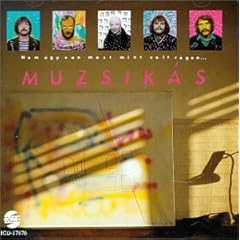
"Muzsikás - Within each genre that comes to North America as "world music," there is always one group of musicians designated as emissaries, virtually equated with that music for a time. In Hungarian folk circles, that group is Muzsikás".
01. Nem úgy van most, mint volt régen (It Is Not Like It Used to Be)
02. Adjon Isten minden jót (God Bless It All)
03. Tudod-e édesem (You Know Darling)
04. Mezöségi tánc (Folkdance)
05. Altató (Lullaby)
06. Félre gatya, pendely (I Want It All)
07. Vonat (Train - Bagpipe Improvisation)
08. Hulljatok levelek (Falling Leaves)
09. Legényes II (Lads Dance II)
10. Mikor mentem hazafelé (On the Way Home)
Musicians:
Márta Sebestyén - voice, recorder
Sándor Csoóri - guitar, hurdy-gurdy, viola, kobsa.
Éri Péter - double bass, buzuki, cello, viola, tambura, töröksip, folk shawm,
Dániel Hamar - double bass
Mihály Sipos - violin, zither.
Link
pass: bluesmen-worldmusic.blogspot.com

"Úzgin Űver was formed in 1991 in Kecskemet, Hungary. The name itself is the name of a Mongolian settlement, where an ancient sacred burial ground was discovered. It means something like ’dry desert area’, ’poor harvest’. The music is almost entirely instrumental, even the human voice is used as an instrument. Our aim from the beginning has been to create a unique blend of the folk music of different nations, using old and new instruments, sounds, tunes. Some characteristic instruments are: sax, clarinet, different kinds of flute, zurna, kaval, duduk, Jewish harp, bagpipes, violin, drums, percussions, electric guitar, sampler, HD-recorder and Tuva-style vocal."
01.I.
02.II.
03.III.
04.IV.
05.V.
06.VI.
07.VII.
08.III.
09.IX.
10.X.
11.XI.
12.XII.
13.XIII.
14.XIV.
15.XV.
16.XVI.
17.XVII.
18.XVIII.
19.XIX.
20.XX.
Farkas Marcsi - violin, vocals;
Homoki Péter- guitar, keyboards, sampler, percussions;
Majoros gyula - clarinet, flutes, kaval, zurna, gaida, duduk, vocals;
Szilágyi Áron - jew's harps;
Almási Krisztián - drums
Paizs Miklós - furulya, trumpet, doromb, bells, dorombének
Part I.
Part II.
pass: bluesmen-worldmusic.blogspot.com
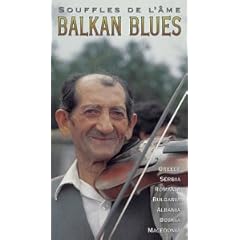
The resulting Balkan Blues anthology sheds a new and different light on the deeply rooted cultural traditions and views that have so often sparked political and religious conflict in this region, for this double CD clearly shows that the music of the Balkans knows no national or ethnic boundaries. Balkan Blues is a musical journey through seven different countries, tracing two aspects of the Balkan soul – on the one hand, ballads that tell of pain and hope, and on the other hand the magical exuberance of the virtuoso performances that accompany joyous celebrations.
From Romania, we hear the melancholy ballads of the great masters Toni Iordache and Dumitru Farcas on cimbalon and taragot, and the legendary fiddler Stoican. We hear the inimitable vocal polyphony of Bulgaria and Albania, as well as a Wallachian Suite by the Bulgarian All Star Orchestra and some incredible solos on ancient instruments such as the gadulka, the kaval and the gaida. Greece brings us the highly accoladed clarinetist Petro-Loukas Chalkias with his Kompania, traditional remebtiko songs with original instruments, maverick lyra player Psanrantonis, and the gently poetic songs of Loudovikos. Serbia’s favourite musicians present the wild side of totally unfettered celebration. From the Bosnian mountains, we hear a heart-rending ballad of love. Macedonia is represented by Esma Redzepova, queen of Roma song, and by the brass orchestral sound that is to be found only in the Balkans, as well as by legendary clarinetist Ferus Mustafov, who composed the title track specially for this anthology.
More than half the tracks in this collection have never been recorded before, or are recorded here on CD for the first time. The lucid text was written by Professor Dr Manfred Bartmann of the University of Salzburg, a recognised authority on Balkan music. As he writes, "The 34 tracks on this CD eloquently document that the musical styles of the Balkans were never really "national" styles. In this awareness lies a glimmer of hope."
Disc: 1
01. Livezile Lui Ion - Achim Mica
02. Sâmbra Oilor Din Maramures - Dumitru Farcas
03. Si Hora - Ion Petre Stoican
04. De la Hulbesti (Si Voce) - Vasile Pandelescu
05. Geamparallele Lui Haidim - Toni Iordache
06. Mikro Kopelidaki Mou - Psarantonis & Ensemble
07. Afou 'Heis Allon Sti Kardia - Ross Daly
08. Mana - Loudovikos Ton Anoyion
09. Tesko Oro - Ensemble Rakija
10. Chelipe (Kolo) - Aleksander Sisic
11. Aven Romalen, Aven Cavalen - Vladimir Kandic
12. Edinaesetorca - Kocani Orkestar
13. Balkan Blues, Pt. 2 - King Ferus Mustafov, Milan Safkov
14. Cherenije - Esma Redzepova
15. Asene, Sinko - Mladen Kojnarov
16. Bavna Melodija I Râcenica - Dimitar Petrov
17. Stujan Otgore Vârvese - Komna Stojanova
18. Thëllëzë Që Shkel Mbi Vesë - Ensemble Tirana
Disc: 2
01. I Agápi Traguidiéte Pánta - Loudovikos Ton Anoyion
02. Emai Orfanós Apó Paidhí - Ross Daly, Nick Tramba
03. Skaros - Petro-Loucas Chalkias & Kompania
04. Oilor - Luca Novac
05. Inel, Inel, De Aur - Dona Dimitru Siminica
06. Balada Haiduceasca - Toni Iordache
07. Cantec de Maja - Vasile Vasilescu
08. Hora Be la Constanta - Ion Petre Stoican
09. Usti, Usti, Babo, O Davulja Maren - Olivera Katarina I Orkestar "Romalen"
10. Oh Ljubav, Ljubav - Ensemble Rakija
11. Preserka [#] - Blehorkestar Bakija Bakic
12. Balkan Blues - King Ferus Mustafov, Milan Safkov
13. Wallachian Suite - Brazilian All-Star Orchestra
14. Radka E Fljala V Gradina - Sestri Georgievi
15. Vito Pëllumbesha - Ensemble Tirana
16. Besèna Rovèna - Rromano Dives
Part I.
Part II.
Part III.
Part IV.

This is something of a 'best of' compilation of Kati's work between the years 1986 and 1996, much of it taken from now deleted albums. As always accompanying Kati are some of the best musicians in Hungary. This release makes for a superb introduction to the wide variety of folk songs and styles that Kati has recorded.
"Kati Szvorak is another singer in the Marta Sebestyen class. But it is Kati’s voice that’s the best instrument here, whether singing sweetly on a tender ballad or using that hard Balkan edge….. Pretty wonderful stuff."
Kati Szvorak has long been a favorite amongst the Táncház audience in Hungary. She has won many awards for her singing and work for folk art in her native Hungary. She has given over two thousand concerts in 27 countries, and has been featured on many other projects including the internationally successful recording ‘Deep Forest’ (1995). In 1999 she appeared at the Edinburgh Festival with the Hungarian all-star group ‘Kőfaragók - The Stonemasons’ to great critical acclaim.
I. Tiszavirág = May - fly
1. Pünkösdi rózsa = Love songs from Moldavia
2. Tavaszvilág = Spring customs song from Moldavia
3. Erdőjárás = Children's game song from Trasylvania
4. Szentiván = Midsummer songs from Zobor region
II.Télizöld = Winter's green
5. Segélj el = Wedding songs from Zobor region
6. Az árgyílus kismadár = Candle dance from Csallóköz
III.Tavaszi szél = Spring wind
7. Román variáció = Rumanian version from Bihar
8. Kontyoló = Kontyoló from Mezőség (Transylvania)
9. Szépen szól egy harang = Sad song from Moldavia
10. Vízöntős = "Vízöntős variation" from Moldavia
IV.Fagyöngy = Mistletoe
11. Bagolyasszonyka = Ballad from Mezőség Transylvania
12. Jajj, Istenem = Love songs from Székely region (Transylvania)
13. Pakular = White sheperd ballad from Moldavia
14. Ahol én elmegyek = "Wherever I go" from Moldavia
15. Bujdosik az árva madár = Dance melody from Gymes (Transylvania)
V.Bűnösök vagyunk? = Are we guilty?
16. Víg juhászok = Christmas song from Palóc region
17. Gyönyörű szép leány = Maria song from Pest region
18. Siralmas ez világ = "This world is deplorable" from Moldavia
19. Óévbúcsúztató = Old year off song from Szatmár
Collaborated in the completion of the album:
Balogh Kálmán
BEKECS
CSÁMBORGÓ
Havasréti Pál
HEGEDŐS
Juhász Zoltán
Kiss Ferenc
Kozák József
Rostás Tibor
VíZÖNTŐ
Link

The Szilvasi Gipsy Folk Band released their first album in 2001. The album contains mainly very lively concert recordings which not only present their unique style and impart the concert atmosphere, but also evidence the bands continuous communication with the audience.
The special elements of the performances can be found in the successful melding of the Oláh Gipsy's performance folklore and gipsy music, which can be observed in both their style and repertoire. An example of this is that their folk songs are accompanied not only by guitar, but also by violin, clarinet and double bass, the first two of which often perform virtuoso solos, in stark contrast to the customs of restaurant gipsy music. A large part of their repertoire consists of Oláh and Hungarian gipsy folk songs alongside Hungarian csárdás tunes with gipsy lyrics. The latter is especially interesting since it represents a renaissance of the csárdás, enhanced and reworked while the international importance of so-called “classical” csárdás music has waned significantly.
1. Ha megfogom az ördögöt...
Ajaj Ricsi Ricsi...
Naj la rotya naj gad...
2. Rumeláj...
3. Drakhorengi jakha
Szőlő szemek
4. Sel mure bakre szasz kethane
Száz bárányom volt együtt...
5. A cigány telepre...
6. Aj Devlale szo te kerav...
Aj Istenem, mit csináljak...
7. Ki látott már télen fecskét...
8. Kígyóballada
9. Ma som shavo haj, lovari
10. A pásztói halastó...
11. Kanna és szájbőgő improvizáció
12. Sun to szi o Del
Szent az István
13. Kothe besjom...
Ott ültem
14. Phurdel balval
Duj duj deshaduj
Szilvási István - vocals, vocal effects, spoon
Bangó Attila - vocals, guitar, vocal effects
Bangó Tibor - vocals, guitar, vocal effects, tambura
Szekeres Attila - jug (water can), derbouka, vocal effects
Bangó László - vocals, jug (water can), vocal effects
Nagy János - vocals, guitar, vocal effects
Also performing:
Setét Jenő - vocals
Lukács Csaba - clarinet
Oláh Ernő - violin
Rinkó Gábor - contrabass
Link
